
19 September
Dear Friends,
The medieval mystic Meister Eckhart said that if the only prayer we ever said was “thank you”, that would be enough. Have you considered practising gratefulness today? Perhaps it’s a good idea to pause for a moment, look around you, and thank God for the gifts of grace you notice: the sunlight, your breath, your home or office, your family, good health, or whatever comes to mind.
Diana Butler Bass writes how grace and gratitude share the same root word: gratus/gratia in Latin and charis in Greek. Grace and gratitude are indistinguishable. When God’s gracious gifts flow into our lives, and we notice them, the natural response is the outflowing of love. The outflowing of a posture of gratitude. 1 Thessalonians 5:18 says it well: “in all things give thanks”. Not “Give thanks for all things”. As Butler Bass reminds us, gratitude is not to give thanks for the violence, or for poverty, or for the troubles we find ourselves in. Instead, it says, give thanks in all things. In all things there is grace – and that is what we are searching for and noticing in every moment of our lives. Searching for grace is different from searching for and highlighting all the good things in my life. As Henri Nouwen said, searching for the good things and being grateful for those is easy. But what would it look like to be grateful for all our lives? He says that if we are to practice this kind of gratitude – finding grace in the good as well as the bad, the moments of joy as well as sorrow, the successes as well as the failures, the rewards as well as the rejections – it will take hard spiritual work. And, therefore, he says: “Let us not be afraid to look at everything that has brought us to where we are now and trust that we will soon see in it the guiding hand of God”.
In her poem Slivers of Sunlight, Wendie Shaffer gives us a beautiful meditation on practising gratitude:
Slivers of sunlight by Wendie Shaffer
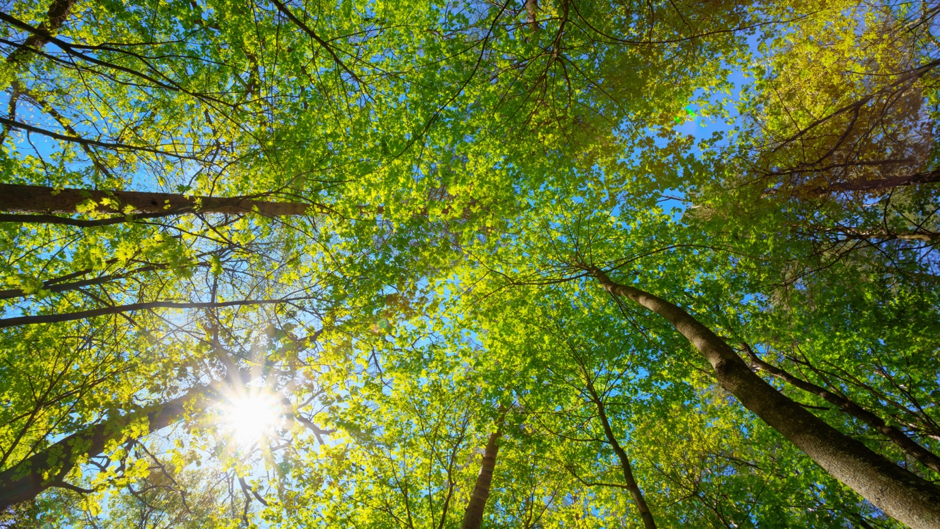
Slivers of thin sunlight
pierce the broad leaves above,
dappling our path.
We crunch on crackling seashells
trampling the shattered pieces
deeper and deeper into the soft soil.
Silent woodland, a few flutters from hidden birds,
a few ear-rejoicing arpeggios from an unseen blackbird.
We wind softly beneath silver birches,
beeches, sycamores, oaks and mountain ash,
cadences of green and copper leaves,
until an open patch where some
captive fallow deer canter and pause –
one antlered, lone master, not for the moment interested
in his submissive harem.
Here jackdaws hop and scamper,
crumb-searching;
we sit and watch, vertical glory
up to the flawless blue above
through and beyond the patterning branches,
high as the swinging swallows,
and beyond...
(In Oegstgeest, 28 July 2026)
Marius