
16 May
Dear Friends,
“Ring the bells that still can ring
Forget your perfect offering
There is a crack, a crack in everything
That's how the light gets in.”
During our morning prayers on Friday, someone noticed that the church ceiling wasn’t painted perfectly all the way through. Somewhere there was a visible gap in the paint, making them wonder if it was done on purpose—a reminder to churchgoers that not everything always needs to be perfect. I thought it was a beautiful thing to notice imperfections during prayer. Perhaps that is the point of prayer: to notice that we are human, frail, vulnerable, dependent on God and others. To notice that we, and the institutions we are part of, have gaps and vulnerabilities. Yet what matters is the appreciation of these imperfections, the acknowledgement that this is what separates us from the robots.
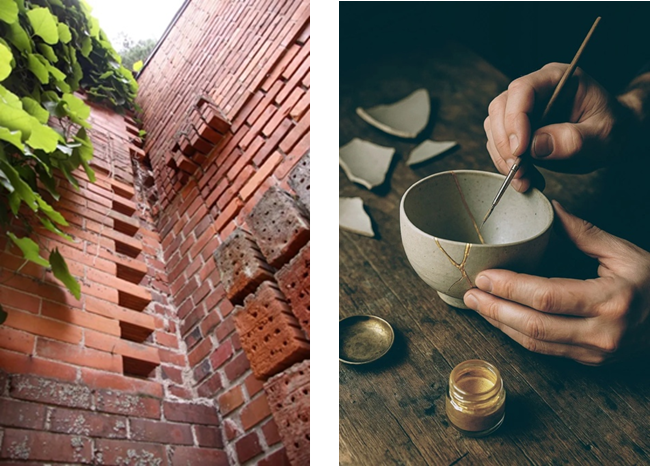
Another person around the table shared the story of a Japanese woodworker (perhaps George Nakashima?) who would create the perfect piece of furniture, only then to deliberately add some slight imperfection before its completion. This was his signature, letting people know that it was done by human hands. It was his celebration of the vulnerable. There are many similar stories. Think about architect Alvar Aalto, who apparently said that bricks should be placed irregularly to draw emphasis to the human labour involved in creating the wall. He believed that perfectly straight walls appeared more robotic and less human.
Then there’s the Japanese art of Kintsugi, where cracks are repaired with golden thread, making the broken ceramic much more valuable exactly because of its “imperfection”. Leonard Cohen said it best: there’s a crack in everything; that’s how the light gets in.
On Sunday we will celebrate the Ascension. Perhaps a helpful way to think about the clouds tearing open and Jesus ascending into heaven is to imagine an irreparable crack opening between heaven and earth on that day. God is left vulnerable, contaminated even. The God of the universe touched our creaturely existence, which left an irreparable tear between us and God. The two—heaven and earth—are now much more intertwined, and the endless light of God’s grace keeps on streaming in, illuminating our earthly existence.
Marius Louw