
23 May
Dear Friends,
On Wednesday, just before returning to Amsterdam from Edinburgh, I was fortunate enough to visit the National Gallery. I was a bit rushed and only had time to walk around the first floor if I didn’t want to miss my flight. Nevertheless, I was brought to a standstill when I saw The Awakening by Phoebe Anna Traquair. As the plaque on the wall informed me, this mysterious image represents the awakening of the human spirit. An angel points, with an arrow, to several figures sleeping in a meadow. They are partially bathed in the light of a rainbow, signifying better times to come. On the left are blossoming trees and flowers, symbolising a new beginning.
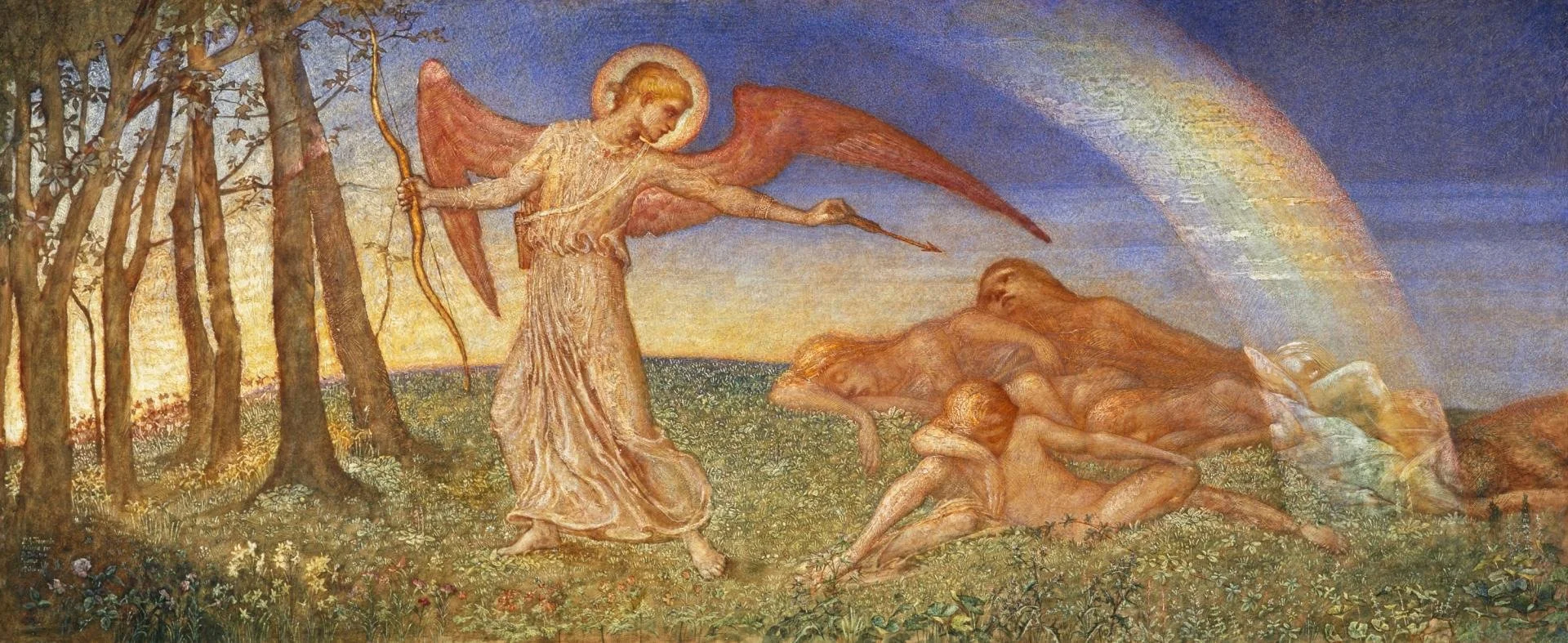
With the Nicene Creed (written in A.D. 325), Christians have confessed for centuries that “we believe in the Holy Spirit, the Lord, the giver of life”. The Spirit is the life-giving Spirit. It is this life giving Spirit that is revealed at Pentecost. Without this breath of God, breathed into dry ground as Genesis tells us, we cannot live. The Bible reminds us of this truth many times, but it is told dramatically in Ezekiel 37.
The prophet sees a vision of God’s people in exile. The Lord, through His Spirit, places him in a valley full of dead, dried-up bones. The prophet walks around the bones, and he sees that they are very dry. Then the Lord asks him, “Can these bones come to life again?” And he answers, “No, only You, the Lord my God, know” (1–3). The Lord says, “Prophesy to these bones and say to them: ... I will put breath in you, and you shall live. I will lay sinews and flesh on you and cover you with skin, and I will put breath in you, and you will live. Then you will know that I am the Lord” (4–6). When the prophet does this, the miracle happens: the bones come together, and sinews, flesh, and skin come together, but there is no breath yet (7–8). Then the Lord says to Ezekiel, “Prophesy now to the spirit/breath ... say to the breath: Thus says the Lord my God: breathe upon these dead bodies, that they may live” (9). He does so, and it happens. The dead bones come to life, and they stand upright, a great multitude (10). Then the Lord says: the bones represent Israel, the people of God, in the deadness of their exile. For they say, “Our bones are dried up, there is no hope for us, we are finished” (11).
Theologian Dirkie Smit reflects on this reading and suggests that the question in verse 3 is what we come face to face in every age as we confess that the Spirit is the giver of life. That is: “Can these bones come to life again?” The Christian confession says: the Lord can and wants to give life. But what about us? Overwhelmed by the deadness around and within us, we often hesitate to answer and instead stammer like Ezekiel: Can life be restored? No, only You know, Lord my God. Do not ask me.
Marius Louw