
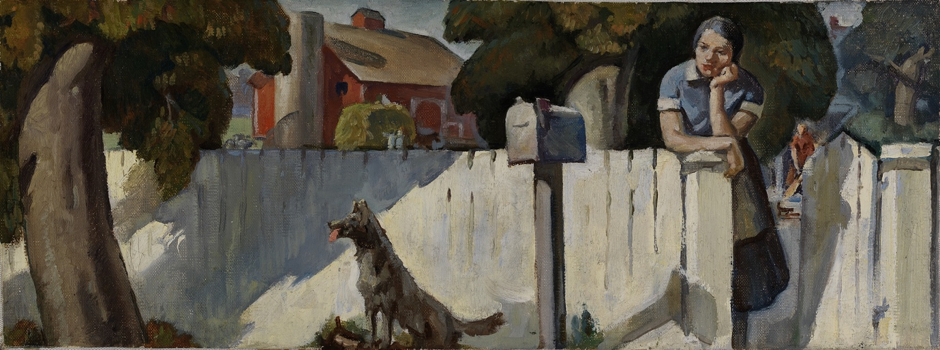
Grant Wright Christian (American, 1911–1989), Waiting for the Mail (mural study, Post Office in Nappanee, Indiana), 1937. Oil on canvas.
Dear friends,
On Sunday we will start with our Advent journey. Advent is all about waiting. But in our culture of instant gratification, waiting seems like a very trivial matter. “Why wait?” seems to be the motto of our time – not least on Black Friday! Unsurprisingly, we are growing increasingly impatient. In the past, waiting was inescapable. We had no instant messaging. If you went by ship, the journey took months, as it did on horseback. Fermenting, growing, harvesting—these are all terribly stretched-out mundane tasks. In our time, speed is the norm. Whatever we want, we can get with just a few clicks. Not to mention instant replies and the super-efficiency which the AI-infused work environment demands. As Safi Syed writes, in a world fixated on speed, waiting is often seen as a failure. We wait for answers, clarity, love, healing, success, and peace. Waiting feels like a gap between meaningful moments. It’s an uncomfortable pause before “real life” starts again. Henri Nouwen wrote that waiting feels like the meaningless desert between where we are and where we want to be. The philosopher Martin Heidegger apparently wrote that modern people view time “not as something lived but as something measured”. We focus on productivity, milestones, and results, turning life into timelines and deadlines. In this way of thinking, waiting feels pointless.
On the other end of the spectrum is the inevitability of waiting. Perhaps we dislike waiting so much because that connects us to our primeval condition. We’re bound to doing some things slowly, whether we like it or not: to be born; to grow up; to reach maturity. Waiting makes us recognise that we do not have full control over life. This realization, says Syed, “disturbs the modern mind”.
So why does the Christian tradition insist on the long wait before God’s coming? The Bible is full of waiting. Take the Psalms: “My soul is waiting for the Lord. I count on his word. My soul is longing for the Lord more than a watchman for daybreak”. We hear this refrain repeatedly throughout the Bible. I always think about the Night’s Watch in Game of Thrones when reading about these watchmen. They brave the cold, attentively aware of every movement, trying their best to keep the wildlings and the White Walkers from crossing into the Seven Kingdoms. It takes a particular type of mental and physical strength to embrace this watchful office. This, I believe, is what Advent is all about. It seeks to cultivate this watchful disposition in our lives.
Nouwen understood something of this when he writes that a waiting person is a patient person: “The word patience means the willingness to stay where we are and live the situation out to the full in belief that something hidden there will manifest itself to us. Impatient people are always expecting the real thing to happen somewhere else and therefore want to go elsewhere. The moment is empty. But patient people dare to stay where they are. Patient living means to live actively in the present and wait there. Waiting, then, is not passive. It involves nurturing the moment, as a mother nurturing a child that is growing in her.”
So, what if waiting is not just that (yes, uncomfortable, boring, scary) part of our existence, but existence itself? How can we come back to a life that “nurtures the moment”? A life that refuses to project itself into the future or be bogged down by the past.
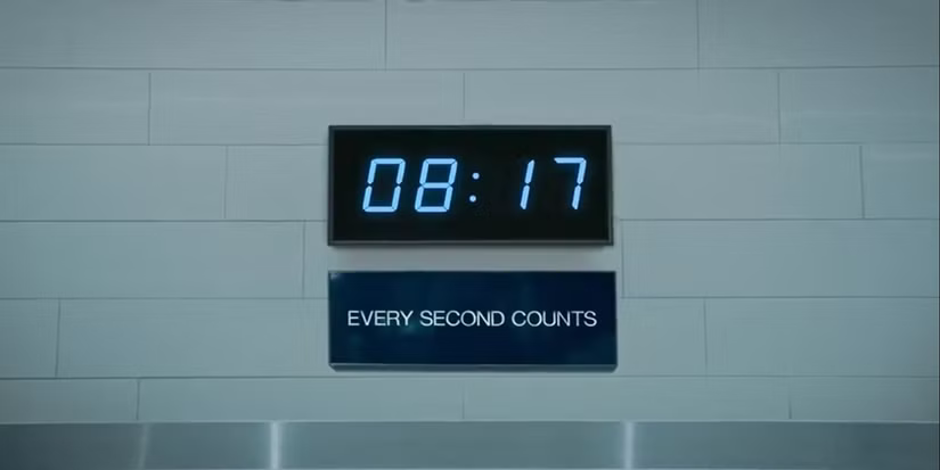
In the hit series The Bear, one of the lead characters “Richie” finds himself as an apprentice in a world-class kitchen. The cinematography is brilliant as it allows the audience to experience Richie’s pounding heart and nervous breathing as he competes with his fellow cooks. Lurking over them is a sign in the kitchen, just above the clock, that reads “EVERY SECOND COUNTS”. Initially, we are led to believe that this is the diabolic motto behind a rushed and ruthless head chef. The lesson Richie had to learn, though, is that it really means what it says: every second counts. Every small thing we do matters. Living in every moment – whether cutting an onion or descaling prawns – makes a good chef great. It was the slowing down and not the speeding up that mattered.
So, when last did you give yourself to the waiting? Could Advent be such a slowing down, expectant, thoughtful, time for you? What habits, discipline or help do you need to fully enter the wait? What could you do over the weekend to get yourself in the mood, as it were? It can be something small. Yesterday, I set out to buy myself an Advent candle. I intend to light it each day as I listen to some of the great Advent hymns. What will work for you?
Marius